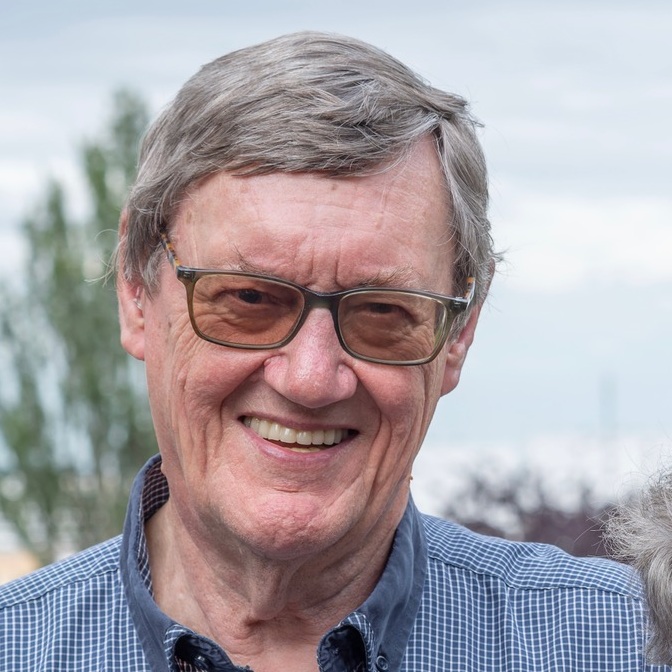
Dave Brown, one of the visiting IBG lecturers, provides an overview
In 1919 a Scotsman called Hugh Alexander (1884-1957) opened the first French-speaking Bible school in the Jura part of Switzerland. This was shortly afterwards transferred to Geneva where land was bought in the suburbs of the city, and an impressive building was constructed. They called it l’École Biblique de Genève and the doors of the school were opened in 1928. It was part of a movement called Action Biblique which Hugh Alexander had set up to distribute the Bible in francophone Europe and beyond. An important part of this vision was the setting up of a chain of Bible bookshops called La Maison de la Bible which are still present in France and Switzerland today. And through these stores, a number of Action Biblique churches also came into existence. Today Action Biblique has 19 churches across France; like Perspectives, they are part of the Réseau FEF (the network for “classical” evangelical denominations).
However, towards the end of the 1980s it became obvious to the committee of the Bible School that it would no longer be financially viable as a school only intended for members of these Action Biblique churches. At the same time, in God’s providence, several leaders of evangelical denominations and missions in France were talking about the need to train pastors, in particular church planters, and an agreement was eventually reached whereby they would become partners in running the Bible School under the leadership of Mike Evans. Mike had previously led OM (Operation Mobilisation) in France and was the director of the highly significant Billy Graham Mission France in 1986. (In fact, as a member of the committee of France-Mission, Mike was also involved in setting up France Mission Trust in 1974.)
The ten partners in the project included France-Mission (today called Perspectives), the Open Brethren movement, and the Christian and Missionary Alliance (CAMA), and today 25 other missions and movements are official associates. To mark this relaunch in 1992, the name was changed to the Institut Biblique de Genève (IBG).
From the outset, the Institute put great emphasis on keeping a good balance between theory and practice. This is ensured in two ways.
The first factor is that much of the teaching is done by visiting speakers from among the ranks of the partner organisations so as to keep the reality of local church ministry to the forefront. I personally have been teaching at the IBG for one or two weeks a year ever since the reopening in 1992, and several other pastors within Perspectives do the same.
The second factor is the way the training is structured over a period of four years. The first year is residential, and all the students live on the property (including married couples and their children). Some of the students are enrolled for just this one-year period and can receive a certificate at the end of this initial training and return to their local churches better equipped for some form of ministry. The others continue for another three years but are on placement as interns with a local church and mentored by the local pastor. In fact, the IBG runs an annual coaching week which is compulsory for the pastor to attend if the church wishes to receive an intern. However, each year the students return to Geneva three or four times for two or three weeks of intensive study.
Since 1928 over 2000 students have been trained at the Institute, including dozens of pastors who ministered in France-Mission or are ministering today in Perspectives. The Institute also hosts an Easter conference for hundreds of young people every other year and the annual conference of Évangile21, the French equivalent of the Gospel Coalition.